
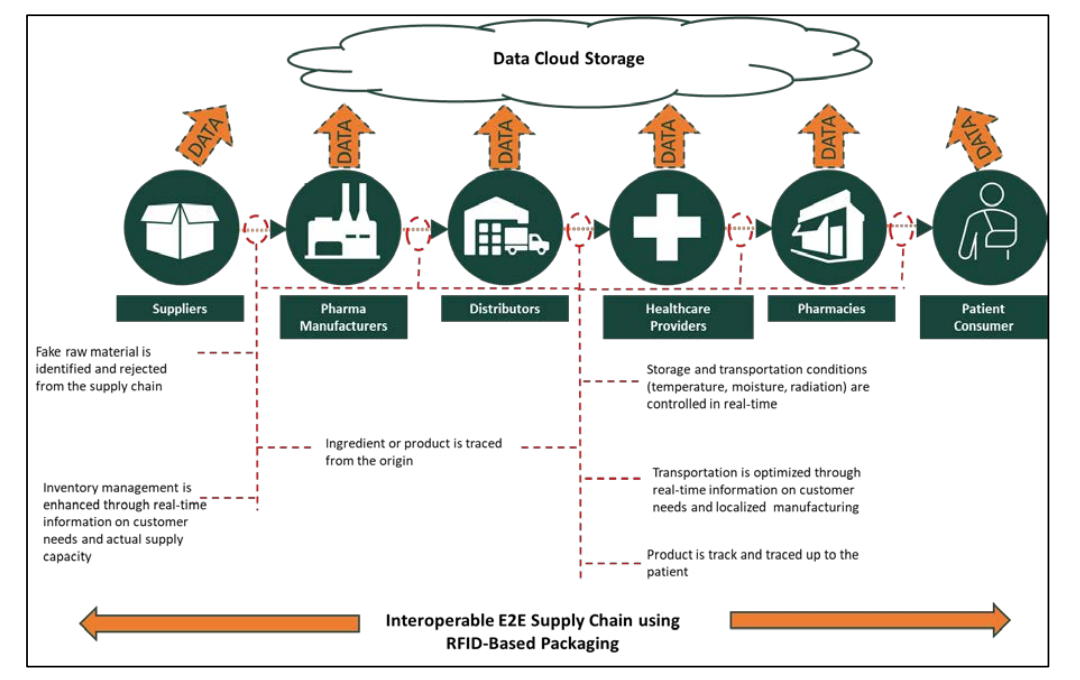
A recent Michigan State University’s Axia Institute study has demonstrated that RFID technology can deliver full, end-to-end traceability of pharmaceutical drugs within a healthcare environment, achieving 100 percent tracking accuracy during a live pilot. The findings provide compelling evidence that RFID is capable of addressing long-standing challenges around medication safety, inventory control, and regulatory compliance in hospitals and health systems.
The study focused on the use of item level RFID tagging applied directly to individual drug packages. By assigning each medication a unique digital identity, researchers were able to track products seamlessly as they moved through the supply chain, from receipt and storage through to dispensing and administration. This approach goes far beyond traditional barcode systems, which typically require line of sight scanning and are prone to human error or missed events.
One of the most significant outcomes of the study was the demonstration of continuous visibility. RFID enabled automated detection of drugs without manual intervention, ensuring that every movement and status change was recorded accurately. This level of traceability supports safer medication practices by reducing the risk of misplaced items, expired drugs remaining in circulation, or incorrect products being dispensed to patients.
The pilot also highlighted the value of RFID in meeting increasingly strict drug traceability and anti counterfeiting requirements. Many healthcare systems face regulatory pressure to maintain detailed records of drug provenance and handling. RFID provides a reliable digital audit trail that can be accessed in real time, making it easier for hospitals to demonstrate compliance while improving internal governance and reporting.
From an operational perspective, the study showed clear efficiency gains. Pharmacy staff were able to perform inventory checks far more quickly than with manual or barcode based processes. Automated stock visibility helped identify low stock levels earlier and reduced the likelihood of over ordering or emergency replenishment. This not only improves availability of critical medications but also supports cost control by minimising waste caused by expired or unused drugs.
The researchers also noted the potential impact on patient safety. Accurate tracking ensures that the right medication is available at the right time and that recalls can be executed rapidly if a safety issue is identified. In the event of a recall, RFID allows affected products to be located instantly, rather than relying on time-consuming manual searches that may delay corrective action.
Importantly, the pilot demonstrated that RFID can be integrated into existing healthcare IT systems. Data generated by RFID readers was successfully linked with pharmacy management and clinical systems, ensuring that traceability information was not siloed. This integration is critical for real world adoption, as hospitals require technologies that enhance existing workflows rather than adding complexity.
While the study was conducted as a pilot, its results suggest strong scalability. The technologies used are mature and widely available, and the processes tested can be replicated across different hospital sizes and healthcare settings. As RFID tag costs continue to fall and standards become more widely adopted, the case for broader implementation becomes increasingly compelling.
The Axia Institute study provides clear, evidence-based validation of RFID as a transformative technology for pharmaceutical traceability. By delivering complete visibility, improving safety, and supporting operational efficiency, RFID has the potential to become a foundational component of modern healthcare supply chains.