
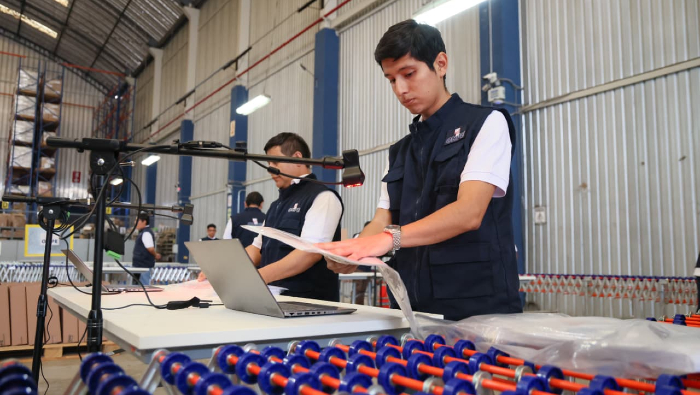
Peru’s National Electoral Office (ONPE) is turning to RFID technology and automated systems to overhaul how election materials are assembled, tracked and transported ahead of the country’s 2026 general elections.
Officials demonstrated the upgraded processes at ONPE’s headquarters in Lurín, Lima, inviting political organisations and media to see the changes first-hand. The centrepiece of the modernisation effort is the introduction of RFID chips embedded in ballot boxes and their components. Each chip carries detailed information about the contents of its box, while radio antennas stationed throughout storage and transport facilities monitor the boxes in real time, verifying that nothing has been tampered with.
“Now we’re applying technology to better manage assembly and transport,” said José Samamé, ONPE’s Electoral Management Manager.
The RFID-enabled tracking system is part of a broader push to tighten election security and improve logistics. Ballot boxes contain several pre-packaged items, including installation packages, ballot packages marked with the mesa number and ballot quantity (a maximum of 300 for national polling stations and 500 for those abroad), scrutiny packages, electoral ballots and official records.
Beyond RFID, ONPE has also added QR codes to individual ballots. Each code reveals the geographic location codes (ubigeo) for the polling station where the ballot will be used, adding another layer of traceability to the process.
On the assembly line, gravity-fed conveyor systems have replaced manual assembly tables, speeding up the workflow and reducing the physical demands on staff. Hermetic sealing of packages is now handled by dedicated sealing machines, taping machines and heat-sealing ovens, ensuring ballot packages (which weigh roughly 5 kilos each) and final boxes (around 9 kilos) are securely closed before leaving the facility.
The upgrades reflect a growing global trend of election authorities adopting RFID and other automatic identification technologies to strengthen the integrity of voting processes. By digitising the tracking of materials from assembly through to delivery at polling stations, ONPE aims to reduce the risk of lost or compromised materials and give voters greater confidence in the system.
Peru’s general elections are set to take place later this year, and ONPE’s modernised approach could serve as a model for other countries looking to bring their election logistics into the digital age.