
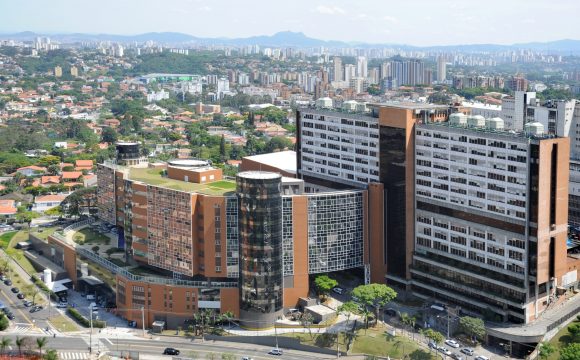
Managing hospital linen might not sound glamorous, but for a 600-bed facility like Albert Einstein Hospital in São Paulo, it is a serious operational challenge. The hospital was losing roughly R$ 1.2 million per year replacing sheets, gowns, and uniforms that simply vanished from its inventory of 40,000 textile pieces. An internal audit revealed that 6,200 items, about 15.5% of the total stock, were unaccounted for at any given time.
The old system relied on manual counting with a 15-day reporting lag, meaning problems were always discovered well after the fact. The hospital’s hotelaria team was burning through 320 hours every month just trying to keep up with physical counts. Meanwhile, roughly 800 replacement pieces were being ordered each month at a cost of R$ 104,000.
To tackle the problem, the hospital partnered with Brazilian RFID integrator Inovacode to deploy a UHF RFID tracking system across its linen supply chain. The solution centered on washable textile RFID tags built around the Impinj Monza R6-P chip, each certified to survive 200 industrial wash cycles. Over an 18-day tagging sprint, all 40,000 pieces received individual UHF labels.
Inovacode installed portal readers at six critical transition points: the laundry exit and return dock, three internment floors, the surgical center, and the emergency room. A middleware layer with a REST API fed real-time tracking data into the hospital’s existing management system, while a dedicated dashboard gave staff instant visibility into item locations, wash cycle counts, and low-stock alerts.
The entire rollout took 90 days and cost R$ 780,000. The results, however, paid that back in just over eight months.
Monthly losses dropped from 800 pieces to just 41, a 94.9% reduction. One of the most valuable insights came from the data itself: 61% of all losses were happening in transit between the external laundry facility and the hospital. With that bottleneck identified, the hospital could apply targeted corrective measures rather than guessing where items were disappearing.
Monthly replacement spending fell from R$ 104,000 to R$ 9,200, saving nearly R$ 95,000 per month. The manual counting burden shrank from 320 hours to 22 hours monthly, freeing staff for higher-value work. Wash cycle tracking also flagged items nearing end-of-life, cutting premature disposal by 18% and extending the useful lifespan of expensive surgical textiles.
Over the first 12 months, accumulated savings reached R$ 1.13 million, exceeding projections by 45%. For hospital administrators weighing the costs of RFID adoption, Albert Einstein’s experience offers a clear message: the technology does not just reduce losses, it makes the entire linen lifecycle visible and manageable in ways that manual processes never could.
Read more at https://site-inovacode.vercel.app/blog#custo-invisivel-enxoval-hospitalar-rfid-sp