
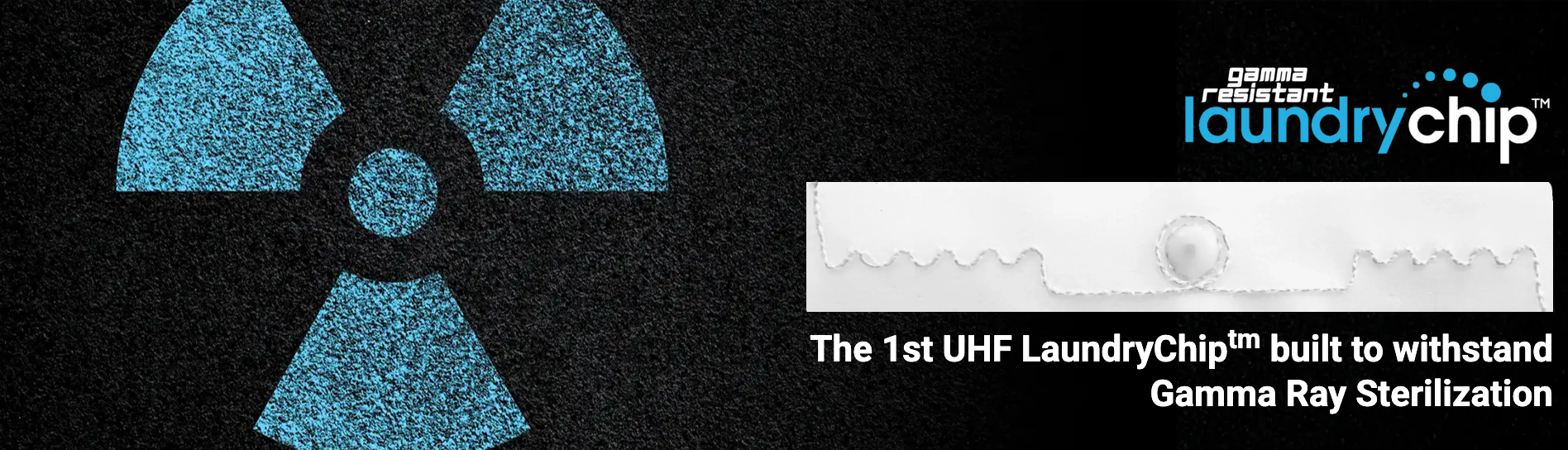
Datamars Textile ID has unveiled the Gamma Resistant LaundryChip FT501-GAM, a UHF RFID tag purpose-built for healthcare and industrial settings that rely on gamma sterilization. The launch addresses a long-standing challenge in textile tracking, where conventional RFID tags degrade and fail when exposed to gamma radiation.
Announced on March 2, 2026, from the company’s base in Lamone, Switzerland, the FT501-GAM is designed to survive more than 100 gamma sterilization cycles without losing operational performance. This makes it the first commercially available RFID laundry tag that can maintain reliable UHF read rates throughout repeated gamma irradiation processes.
Why Gamma Resistance Matters
Gamma sterilization is widely used in hospitals and healthcare facilities to decontaminate reusable textiles such as surgical gowns, scrubs, and sterile drapes. Until now, facilities that depend on gamma irradiation for compliance have been unable to use RFID tags for textile tracking, creating a blind spot in asset management. Items would lose their digital identity after sterilization, making it impossible to track inventory accurately or maintain proper documentation.
The FT501-GAM solves this problem by using specialized components that resist gamma ray degradation. Each tag is engineered to deliver consistent UHF reading performance even after extensive sterilization exposure, ensuring that every tagged textile remains traceable from linen room to operating theatre and back again.
Built on a Proven Platform
The new tag is built on the established LaundryChip mechanical platform, which has been tested and trusted across industrial laundry operations worldwide. This means the FT501-GAM delivers the same physical durability that laundry operators expect, including resistance to high temperatures, moisture, mechanical stress, and industrial washing chemicals.
Integration is straightforward. The tag works with existing UHF RFID infrastructure, so healthcare facilities and laundry service providers do not need to invest in new readers or modify their current systems. Organizations can simply begin tagging gamma-sterilized textiles and immediately gain visibility into assets that were previously untrackable.
Business Impact for Healthcare and Industrial Laundry
For healthcare facilities, the benefits are significant. Continuous traceability through sterilization cycles means better asset control, fewer lost or misplaced textiles, and stronger compliance documentation. Laundry service providers can offer enhanced tracking services to clients in sterile environments, opening up a market segment that was previously inaccessible to RFID-based solutions.
The tag also supports broader sustainability goals by helping organizations extend the useful life of reusable textiles through better inventory management and reducing unnecessary replacements.
Decades of RFID Innovation
Datamars Textile ID brings more than 35 years of RFID expertise to this launch. The company invented the original LaundryChip trademark in 1990 and holds multiple patents in RFID-based textile identification technology. The Gamma Resistant LaundryChip represents the latest advancement in a product line that has defined the standard for RFID in industrial laundry applications.
Read more at https://textile-id.com/datamars-textile-id-launches-the-gamma-resistant-laundrychip/