
Hospital laundry operations face a unique set of pressures that most commercial laundries never encounter. Between strict infection control protocols, complex sorting requirements, and the constant challenge of maintaining adequate stock levels across dozens of departments, healthcare linen management has long been one of the most resource-intensive support services in any hospital. RFID technology is now changing that, delivering measurable improvements in cost control, compliance, and operational efficiency.
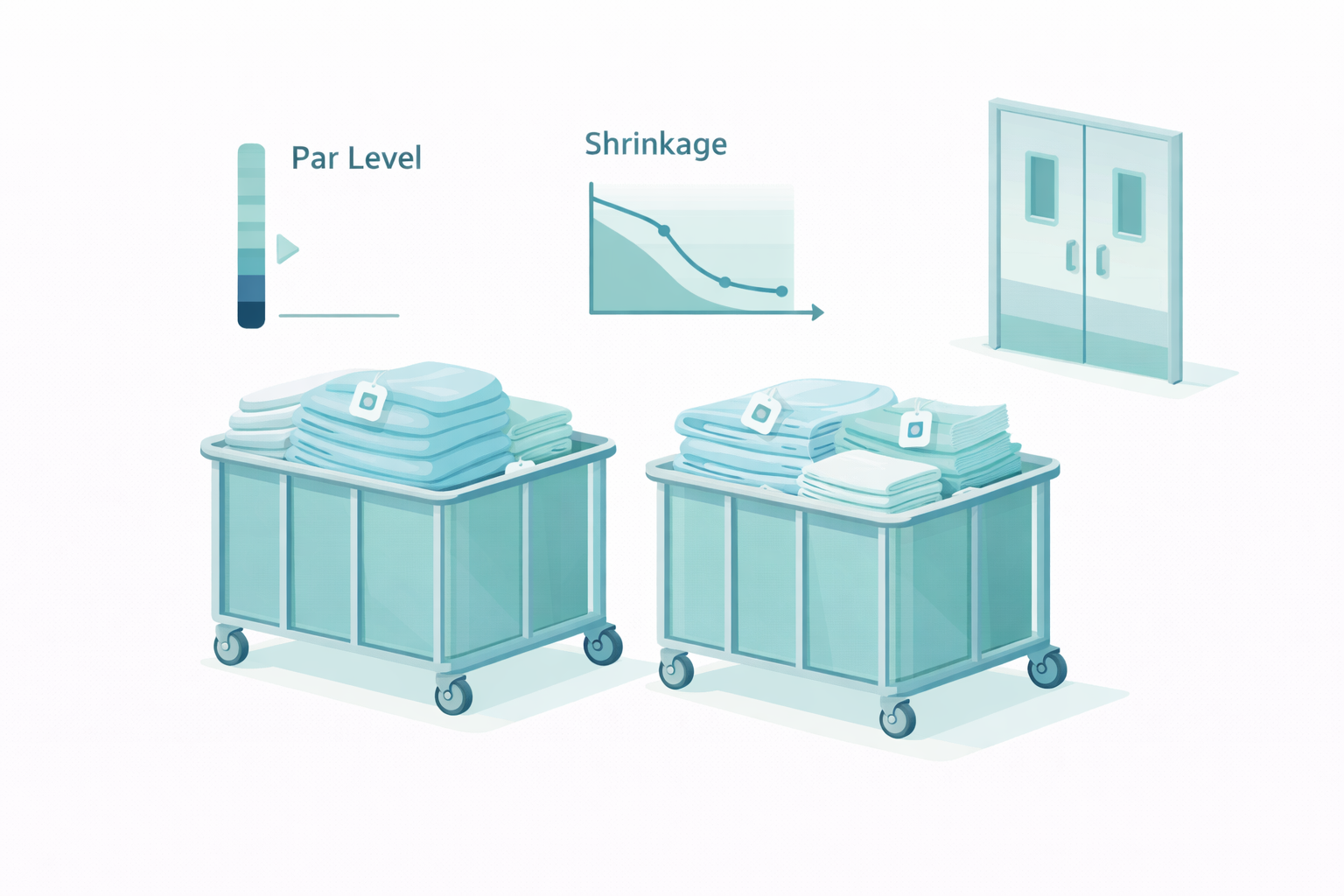
The scale of the problem is significant. A typical 500-bed hospital processes between 3,000 and 5,000 kg of linen every day. Scrubs, bed sheets, surgical drapes, patient gowns, and staff uniforms all require different handling, washing temperatures, and tracking. Traditionally, staff relied on manual counting and paper-based systems to manage par levels, the minimum stock each unit needs to function. The result was frequent overstocking in some areas and shortages in others, with little visibility into where items actually were at any given time.
UHF RFID laundry tags, typically sewn into a hem or heat-sealed onto fabric, solve this by giving every textile item a unique digital identity. Each tag contains an EPC (Electronic Product Code) that links to a record in the hospital’s linen management system. As items pass through RFID-equipped collection points, laundry chutes, sorting stations, and delivery carts, the system automatically logs their location and status. Staff no longer need to count manually, and par levels can be maintained dynamically based on real usage data rather than estimates.
Infection control is where RFID delivers some of its most important benefits. Hospitals must ensure that soiled linen from isolation rooms or surgical suites is handled according to strict protocols. RFID readers at collection points can verify that contaminated items are routed to the correct wash cycle, with the right temperature, chemical concentration, and dwell time. The system creates an auditable trail for every item, which simplifies compliance reporting and reduces the risk of cross-contamination.
Cost savings are equally compelling. Linen shrinkage, the gap between what a hospital purchases and what remains in active circulation, has historically run as high as 30% annually in some facilities. Items go missing through hoarding, accidental disposal, or theft. Facilities that have deployed RFID tracking consistently report shrinkage reductions of 15% to 25%, translating directly into lower replacement spend. When a single surgical drape can cost over 20 pounds, those savings add up quickly across an entire hospital system.
The cost-per-wash-cycle picture also improves. With accurate data on how many times each item has been laundered, hospitals can retire textiles before they degrade to the point of failure, reducing rewash rates and extending the usable life of their stock. Some systems flag items that have exceeded their recommended wash count, ensuring patient-facing textiles always meet quality standards.
Modern UHF RFID laundry tags are designed to withstand industrial washing at temperatures above 75 degrees Celsius, tumble drying, ironing, and chemical treatment. Leading tag manufacturers now offer products rated for 200 or more wash cycles, making the per-use cost negligible compared to the efficiency gains.
For hospital procurement and facilities teams looking to justify the investment, the data speaks clearly. Reduced shrinkage, lower labour costs for counting and sorting, better infection control compliance, and optimised par levels all contribute to a return on investment that most facilities achieve within 12 to 18 months of deployment.