
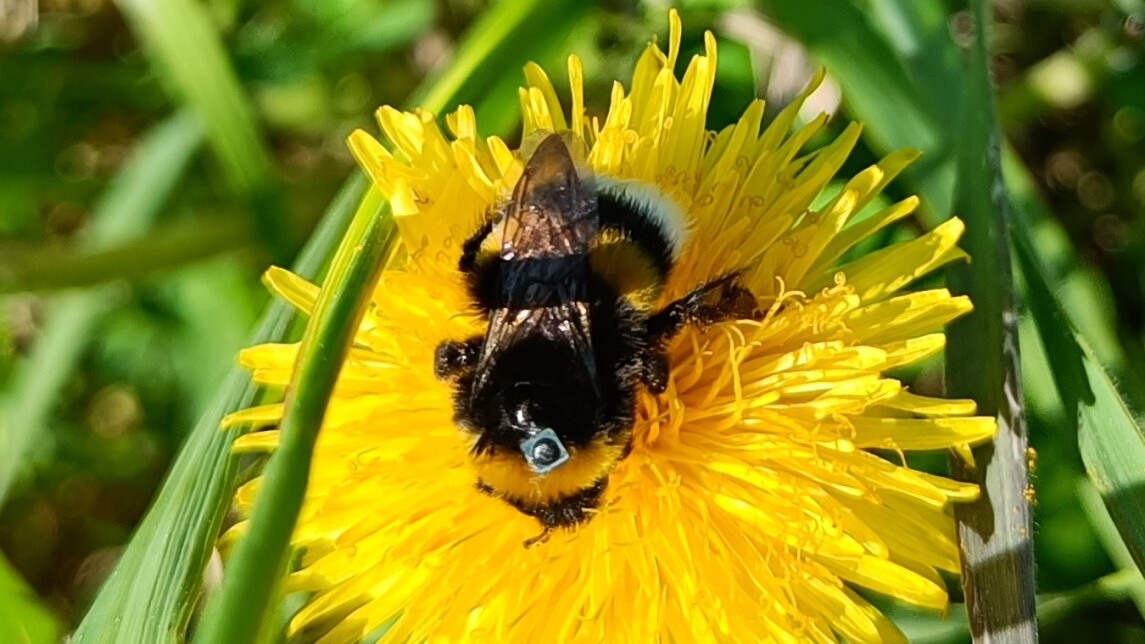
A new study by researchers at the University of Turku and the University of Oulu in Finland has revealed that prallethrin, a common insecticide found in mosquito repellent devices such as Thermacell, severely disrupts the navigational abilities of bumblebees. What makes this research particularly noteworthy for the RFID community is how the team carried out their tracking: by fitting individual bees with tiny RFID tags.
The researchers attached RFID tags to 167 buff-tailed bumblebees before releasing them one kilometre from their nests. Using RFID readers positioned at the nest entrances, the team monitored which bees successfully returned over a three-day observation window. This method of RFID-based animal tracking allowed precise, automated data collection that would have been nearly impossible through visual observation alone.
The results were striking. Bumblebees in the control group, which had no exposure to prallethrin, returned to their nests at a rate of 37%. Those exposed to the insecticide for just one minute showed similar return rates. But after ten minutes of exposure, the return rate dropped to just 17%. Most alarming of all, bees subjected to twenty minutes of exposure managed only a 5% return rate.
Crucially, the insecticide did not appear to kill the bees outright. Mortality rates stayed consistent across all groups, which points to a specific impairment of navigation rather than general toxicity. The bees were alive but simply could not find their way home.
Senior Research Fellow Olli Loukola stressed the wider implications: “Returning to the nest is essential to survival of the entire colony.” When foraging bees fail to return, the colony loses its food supply. Over time, this weakens the population and reduces the number of new queens produced, threatening the long-term survival of local bumblebee populations.
The use of RFID technology in this study highlights the growing role of radio frequency identification in ecological and environmental research. Small, lightweight RFID transponders operating at low frequency (LF) are increasingly used to track insects, birds, and other small animals in field conditions. The technology provides reliable identification without the need for visual contact, making it ideal for monitoring wildlife behaviour over extended periods.
In Finland, Thermacell devices are already restricted to immediate residential areas such as gardens and patios, and are prohibited for use indoors or in natural environments. However, the researchers argue that these restrictions may not go far enough. They are calling for a broader reassessment of the ecological safety of household insecticides that affect pollinators.
The study was published in the journal Biology Letters.
Read more at https://www.utu.fi/en/news/press-release/insecticide-in-insect-repellents-impairs-bumblebees-ability-to-navigate